


Why choose cotton drapery: benefits for your home in 2026
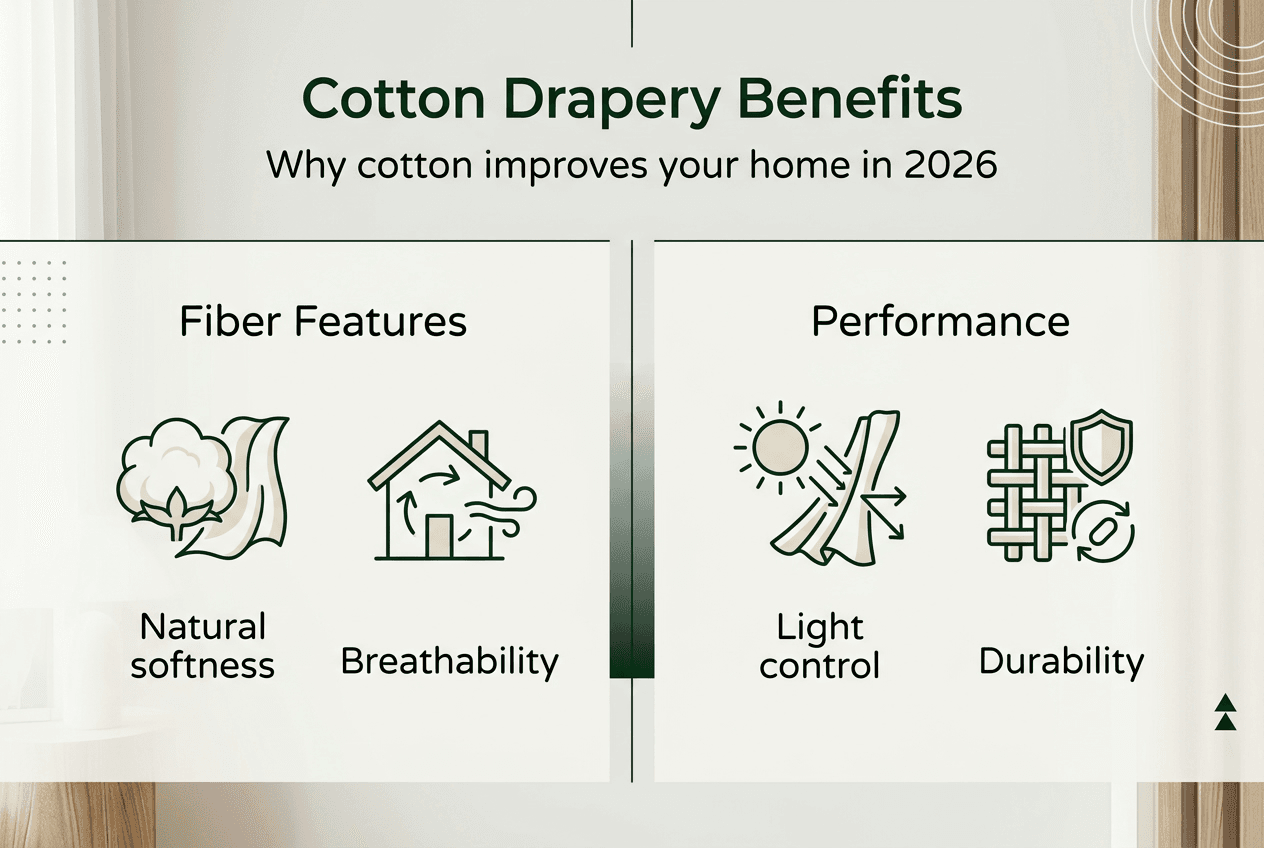
Many homeowners assume synthetic fabrics outperform natural materials for window treatments, believing polyester or nylon offers superior durability and color vibrancy. This misconception overlooks cotton’s exceptional qualities that make it the premier choice for drapery in 2026. Cotton drapery delivers unmatched softness, breathability, and light control while maintaining vibrant colors and easy care. This guide reveals why cotton excels for home interiors, covering fiber science, light management, maintenance, and expert selection tips to help you make informed decisions for your living spaces.
Table of Contents
- Understanding The Fibers: Why Cotton Excels For Drapery
- Light Control And Privacy: The Science Behind Cotton Drapery’s Performance
- Maintenance Made Simple: Caring For Your Cotton Drapery
- Selecting Your Perfect Cotton Drapery: Expert Tips And Considerations
- Enhance Your Home With High-Quality Cotton Drapery Today
- Why Choose Cotton Drapery: Frequently Asked Questions
Key takeaways
| Point | Details |
|---|---|
| Superior comfort | Cotton provides natural softness and breathability that synthetic fabrics cannot replicate. |
| Vibrant lasting colors | Cotton fibers absorb dyes deeply, creating rich hues that resist fading over time. |
| Excellent light control | Dense cotton weaves diffuse light gently while providing privacy without blocking airflow. |
| Simple maintenance | Machine washable and dry cleanable options make cotton drapery easy to care for. |
| Natural static reduction | Pure cotton eliminates static cling common in synthetic materials. |
Understanding the fibers: why cotton excels for drapery
Cotton’s cellular structure creates advantages that synthetic materials cannot match. Each fiber consists of hollow tubes that trap air, providing natural insulation and a soft hand feel. This structure allows cotton to accept dyes readily, producing colors that penetrate deep into the fiber rather than sitting on the surface. The result is exceptional color retention that resists fading from sunlight and repeated washing.
The natural crimp in cotton fibers creates elegant draping characteristics. Unlike stiff synthetics, cotton flows gracefully from curtain rods, forming soft folds that enhance room aesthetics. Ring spun cotton yarn, created by twisting fibers tightly together, produces even stronger fabric with consistent texture. This manufacturing process eliminates weak spots and creates drapery that maintains its shape through years of use.
Pro Tip: Look for ring spun cotton fabrics when shopping for drapery. The tighter fiber twist creates superior strength and a smoother surface that reflects light beautifully.
Cotton’s breathability sets it apart from polyester or acrylic alternatives. Natural fibers allow air circulation, preventing moisture buildup that can lead to mildew or musty odors. This quality proves especially valuable in humid climates or rooms with limited ventilation. Consumer testing confirms that cotton provides comfort that enhances room ambiance, making spaces feel fresher and more inviting.
The cotton drapery style durability impact extends beyond basic wear resistance. Cotton fibers become stronger when wet, unlike synthetics that weaken with moisture exposure. This characteristic means cotton drapes withstand cleaning without degradation, maintaining their structural integrity through countless wash cycles. The natural resilience of cotton fibers allows them to spring back after compression, preventing permanent creasing that plagues synthetic materials.
Light control and privacy: the science behind cotton drapery’s performance
Cotton’s interaction with light creates practical benefits for homeowners seeking both privacy and ambiance. The fiber structure absorbs and scatters light waves, reducing harsh glare while maintaining room brightness. This diffusion effect softens sunlight entering through windows, creating comfortable illumination without the stark shadows cast by synthetic fabrics.
Fabric weight, measured in grams per square meter (GSM), determines how effectively cotton drapery controls light transmission. Understanding GSM helps you select appropriate fabrics for different rooms and privacy needs:
| GSM Range | Light Control | Privacy Level | Best Use |
|---|---|---|---|
| 150-200 | Light filtering | Moderate daytime | Living rooms, dining areas |
| 200-280 | Medium blocking | Good daytime, limited night | Bedrooms, home offices |
| 280-350 | Heavy blocking | Excellent all day | Media rooms, nurseries |
| 350+ | Maximum blocking | Complete privacy | Light sensitive spaces |
Tighter weaves create denser fabric that blocks more light while maintaining cotton’s natural breathability. A 300 GSM cotton drape provides substantial privacy without the stuffy feeling of vinyl backed synthetics. The cotton fabric light control advantage comes from natural fibers working together to absorb light energy rather than reflecting it harshly.

Pro Tip: Test fabric samples in your actual window location at different times of day. Morning and afternoon light angles reveal how effectively cotton controls brightness and privacy.
Pure 100% cotton eliminates static electricity that causes synthetic drapes to cling to windows or attract dust. This natural property keeps cotton drapery hanging properly while reducing maintenance needs. The breathable nature of cotton also prevents condensation buildup between windows and drapes, protecting both the fabric and your window frames from moisture damage.
When choosing the right drapery fabric, consider how cotton’s light diffusion creates ambiance. Unlike blackout synthetics that create stark on/off lighting conditions, cotton provides gradual light control. You can layer sheers with heavier cotton drapes to adjust privacy and brightness throughout the day, creating flexible window treatments that adapt to your needs.
The window treatment fabric tips emphasize matching GSM to room function. Bedrooms benefit from 280+ GSM for sleep quality, while living spaces work well with 200-250 GSM that balances light and openness. Cotton’s natural properties mean even lighter weight fabrics provide better privacy than comparable synthetic alternatives.
Maintenance made simple: caring for your cotton drapery
Cotton drapery maintenance requires less effort than most homeowners expect. The cotton fabric care guide confirms that cotton tolerates both machine washing and professional dry cleaning, giving you flexibility based on fabric weight and construction. This versatility means you can maintain your drapes without specialized equipment or expensive services.
Machine washing cotton drapes preserves their softness and color vibrancy when done correctly. Use cool or warm water with mild detergent, avoiding harsh chemicals that break down natural fibers. The gentle or delicate cycle provides sufficient agitation without stressing seams or hems. Cotton’s strength when wet means you can wash substantial drapes without fear of tearing or stretching.
- Remove drapes promptly after washing to minimize wrinkles and reshape while damp
- Tumble dry on low heat or line dry to prevent excessive shrinkage
- Iron on medium heat while slightly damp for crisp pleats and smooth panels
- Avoid chlorine bleach which weakens cotton fibers and causes yellowing
- Store clean drapes in breathable cotton bags, never plastic, to prevent mildew
- Vacuum drapes monthly using upholstery attachment to remove dust and allergens
Pro Tip: Pre shrink cotton drapery fabric before sewing or hang new drapes slightly long to accommodate 2-3% shrinkage after first washing.
The curtain cleaning guide recommends cleaning cotton drapes every 3-6 months depending on household conditions. Homes with pets, smokers, or high dust levels benefit from more frequent cleaning. Regular maintenance prevents soil buildup that becomes harder to remove over time, extending the life of your window treatments significantly.
Dry cleaning offers advantages for heavily lined drapes or those with special finishes. Professional cleaners use solvents that clean thoroughly without water exposure, eliminating shrinkage concerns. This method works especially well for formal drapery with intricate pleating or delicate trims. However, most standard cotton drapes perform perfectly with home washing, saving you money and inconvenience.
Spot cleaning addresses small stains without full washing. Blot spills immediately with clean white cloth, working from outside edges toward the center to prevent spreading. Mix mild detergent with cool water and gently dab the stained area, then rinse with clean water and air dry. This approach handles most common household stains while preserving the overall drape appearance between deep cleanings.
Selecting your perfect cotton drapery: expert tips and considerations
Choosing cotton drapery requires evaluating several factors that impact performance and satisfaction. Start by prioritizing 100% cotton over cotton blends. Pure cotton provides maximum breathability, eliminates static, and offers superior dye absorption compared to poly cotton mixes. Blends compromise cotton’s natural benefits while introducing synthetic drawbacks like reduced softness and increased static cling.
- Determine your required GSM based on room function and privacy needs using the guidelines above
- Request fabric swatches and test them in your actual window location during different lighting conditions
- Check fiber content labels to verify 100% cotton composition without synthetic additives
- Examine weave tightness by holding fabric to light and assessing how much illumination passes through
- Consider color fastness ratings if drapes will receive direct sunlight exposure
- Evaluate fabric hand feel for softness and draping quality by gathering material in your hand
- Compare prices across suppliers while factoring in fabric weight and quality indicators
Ring spun cotton proves superior for light diffusing applications because of its strength and consistency. The manufacturing process aligns fibers uniformly, creating smooth surfaces that reflect and scatter light evenly. This quality produces better color depth and more elegant draping compared to standard cotton yarn construction.
Pro Tip: Unbleached or oxygen bleached cotton resists UV damage better than chlorine bleached alternatives. The natural or gently processed fibers maintain structural integrity longer when exposed to sunlight.
Fabric treatments affect cotton drapery performance in significant ways. Understanding these differences helps you select appropriate materials:
| Treatment Type | Benefits | Considerations | Best For |
|---|---|---|---|
| Unbleached natural | Maximum UV resistance, eco friendly | Cream or beige color only | Casual, organic aesthetics |
| Oxygen bleached | Bright white, gentle process | Slightly higher cost | Traditional, formal spaces |
| Piece dyed | Vibrant uniform color | May show fading over years | Statement window treatments |
| Yarn dyed | Superior colorfastness | Limited pattern options | High sun exposure areas |
The 2026 cotton curtains guide emphasizes testing swatches in natural light. Colors appear dramatically different under fluorescent store lighting versus sunlight streaming through windows. Take samples home and observe them at various times throughout the day before committing to large yardage purchases.
Consider lining options that enhance cotton drapery performance. Cotton sateen linings add body and improve light blocking without synthetic materials. Interlining between face fabric and lining creates luxurious fullness while boosting insulation properties. These natural fiber combinations maintain breathability while delivering enhanced functionality.
Expert guidance helps navigate the extensive cotton drapery options available. Understanding why use custom drapes reveals how professional fabrication ensures proper fullness, hem weights, and header styles that maximize cotton’s natural draping qualities. Custom work accommodates unusual window sizes and architectural details that ready made panels cannot address.
Enhance your home with high-quality cotton drapery today
Transforming your living spaces with premium cotton drapery becomes simple when you access quality materials and expert guidance. Beautiful Windows Elgin specializes in designer cotton fabrics that deliver the performance and aesthetics discussed throughout this guide. Whether you need fabric by the yard for DIY projects or prefer custom fabrication services, you’ll find extensive options tailored to your specific requirements.

Explore the complete selection of designer fabrics by the yard to discover cotton options in various weights, colors, and weaves. The curated collection includes everything from lightweight sheers to heavy blackout weights, ensuring you find perfect matches for every room. Beyond cotton drapery, consider complementary materials like waterproof canvas fabric for outdoor furniture to extend your design vision throughout indoor and outdoor spaces. Professional design consultations help you select ideal fabrics and create cohesive window treatment plans that enhance your home’s beauty and functionality.
Why choose cotton drapery: frequently asked questions
Is cotton better than synthetic fabric for drapes?
Cotton surpasses synthetics in softness, breathability, and natural light diffusion. Pure cotton eliminates static cling while providing superior comfort and room ambiance. Synthetic fabrics may resist wrinkles slightly better, but they trap heat, attract dust, and lack the elegant draping qualities of natural cotton fibers.
How do I maintain and clean cotton drapery?
Most cotton drapes tolerate machine washing on gentle cycles with mild detergent and cool water. Remove promptly and reshape while damp to minimize wrinkles. Alternatively, professional dry cleaning works well for lined or formal drapery. Regular vacuuming between deep cleanings removes dust and extends time between washes.
What kind of light control does cotton provide?
Cotton offers excellent light diffusion that softens harsh sunlight while maintaining room brightness. Fabric weight (GSM) determines blocking power, with 280+ GSM providing substantial privacy and light reduction. Unlike synthetic blackout materials, cotton achieves light control while remaining breathable and natural looking.
Can I get custom sized cotton drapes?
Custom cotton drapery accommodates any window size or architectural feature. Professional fabrication ensures proper fullness ratios, header styles, and hem weights that maximize cotton’s natural draping qualities. The cotton curtains guide details measurement and ordering processes for perfect fitting window treatments.
Are 100% cotton drapes worth the investment?
Pure cotton drapery delivers lasting value through durability, timeless aesthetics, and easy maintenance. The natural fiber’s strength when wet means cotton withstands repeated cleaning without degradation. Superior comfort, breathability, and light control justify the investment compared to cheaper synthetic alternatives that require earlier replacement.
Recommended
- Cotton Drapery Explained: Style, Durability, and Impact – Shop Designer Fabrics by the Yard | Curtains & Drapery
- Curtain fabric types: Choose perfect fabrics for style – Designer Fabrics by the Yard | Drapery Making Services
- 7 Essential Curtain Fabric Types List for Homeowners – Shop Designer Fabrics by the Yard | Curtains & Drapery
- How to Choose the Right Fabric for Drapery – Shop Designer Fabrics by the Yard | Curtains & Drapery